Software Compatibility, Smart TV Customization and a Careful Shipwreck Operation
Denmark’s office software trial shows the cost of mixed formats, while Android TV tweaks and a shipwreck project highlight very different kinds of technical work.
Software choices become infrastructure decisions when people need to exchange files every day. That’s the practical lesson from Denmark, where a trial of alternatives to Microsoft software reportedly ran into trouble when staff using Collabora worked with colleagues using Office. The trial was later dropped, leaving open what the setback means for the wider effort to reduce reliance on proprietary tools.
The issue points to a familiar limit of small deployments: changing the application on some computers doesn’t change the formats and habits shared across an organization. Documents can look different between office suites, and features may not behave the same way. Even when both sides can open a file, layout, comments, or other details may not survive a round trip cleanly. For staff whose work depends on documents moving between teams, those mismatches quickly become operational friction.
Office software needs a shared format
A broader move to the Open Document Format (ODF) could reduce compatibility problems for newly created documents, as the original report argues. But that means coordinating the change across teams, rather than installing Collabora or OpenOffice on a limited set of machines and expecting the surrounding workflow to adapt. Existing files, templates, and established processes would also need attention. The source doesn’t describe the trial’s specific failures or the size of the rollout, so it’s hard to tell whether the problems came from file formats, user workflows, or both.
That distinction matters. A software migration can look successful in a test group while failing at the points where work crosses organizational boundaries. Teams in this position typically need to agree on default formats, check how important documents render in each application, and decide how to handle files that still depend on the old suite. The Danish trial is a reminder that interoperability has to be planned as part of the transition. The next useful signal will be whether the broader effort continues and whether it sets shared document practices alongside its software choices. A separate move to Linux in the Netherlands offers a comparison point, though the source gives no detail on how the two efforts differ: the Dutch project.
AI makes Android TV changes easier to try
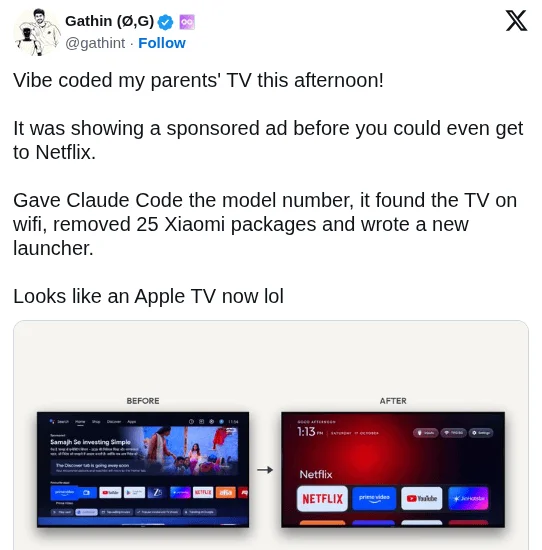
At the personal-device scale, frustrated smart TV owners are turning to AI tools to reshape their interfaces. The Verge describes users directing Claude at Android-based TVs, with examples that remove advertising elements or replace the default home screen with a custom one. The results can look like a new capability, but the underlying work relies on familiar Android tools.
Android Debug Bridge (ADB) lets a developer connect to a device and manage its software. On a compatible TV, users can use that connection to remove packages responsible for unwanted features. A replacement home screen is an Android app installed over the network. AI can help people write or adapt the code and navigate the steps, but it isn’t bypassing the platform’s basic development model. The technique is most accessible to people comfortable with Android debugging, and the source doesn’t establish that it works on every television or software version.
That makes the trend interesting for a practical reason: it shows how an AI coding assistant can lower the effort involved in tailoring a device someone already owns. It also puts the burden of maintenance on the user. A TV update could change what can be removed or how a custom launcher behaves, and a modified interface may require troubleshooting when something breaks. For people unhappy with the stock experience, the approach offers room to experiment, with compatibility and ongoing upkeep as the trade-offs.
Removing a structure from a hazardous wreck
A very different engineering challenge took place near Sheerness, England, where crews completed the removal of the masts from the sunken Second World War cargo ship SS Richard Montgomery. The wreck contains an estimated 1,400 metric tons of explosives, which have been deteriorating since 1944. The masts and their supports were thought to be at risk of falling into the hull, so the work required careful planning around a structure whose condition carries serious consequences.
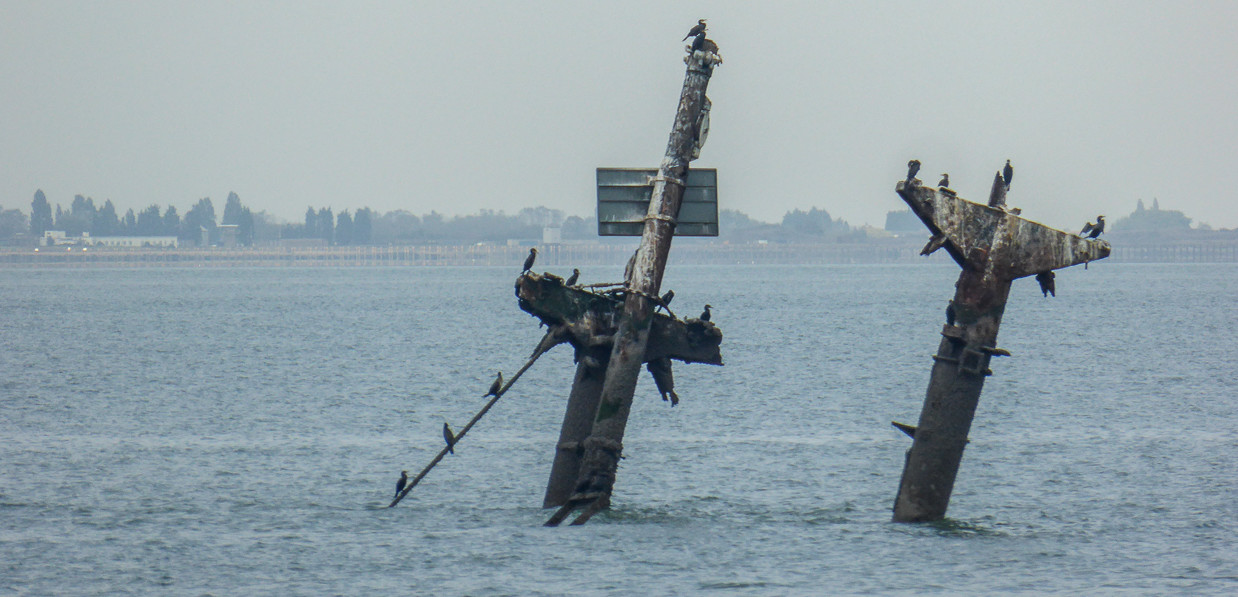
The completed removal addresses the masts and their supporting structures; it doesn’t remove the explosives from the ship. That larger task remains a separate undertaking, and the source provides no timetable or method for it. For now, the work has helped stabilize one part of the wreck. It’s a reminder that careful engineering can reduce a specific hazard without resolving every challenge at a site.
A map for nearby Wikipedia pages
For a lighter local project, Ed Jefferson’s Local Wikipedia filters Wikipedia pages by distance from a user’s location or another chosen landmark. Its default search radius is 1.5 miles. If few results fall within that range, the site expands the radius to find more.
The simple idea changes how people browse a familiar reference source: instead of starting with a topic, they can start with what’s nearby. That could make the site useful for exploring a neighborhood or finding a place to read about while traveling. The week’s links range from document compatibility to device customization and delicate physical work, but each turns on the same practical question: what changes when tools meet the conditions people actually work in?
Have a link that could fit a weekly Links column? Send it in.