Hackaday Supercon 2026: 20 Talks on Hacked Hardware, Making and Machine Learning
From low-cost radios and open hardware to haptics and reverse engineering, Supercon’s 20 talks focus on practical experiments and tools.
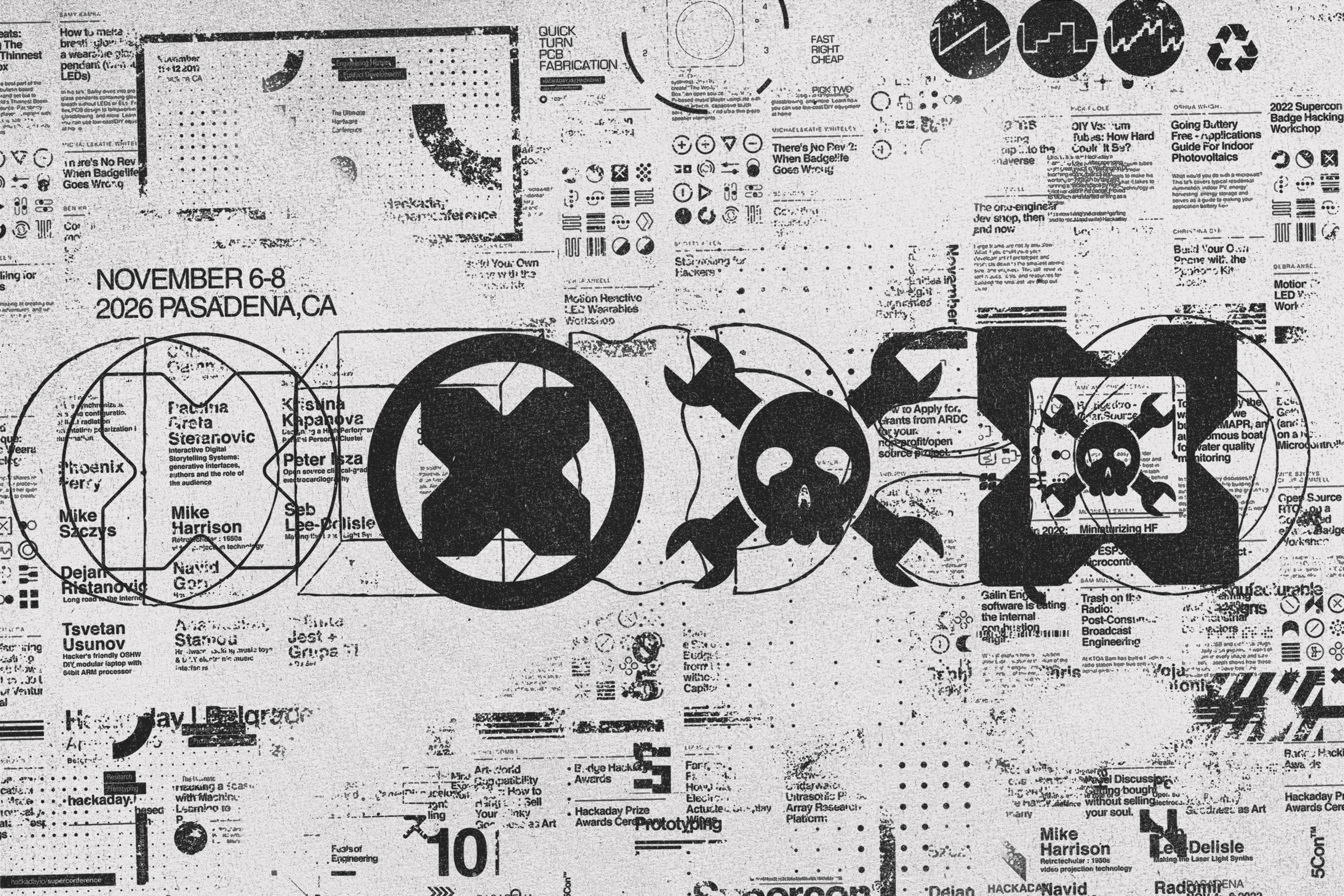
Hackaday Supercon’s 2026 program brings together 20 talks about getting more from hardware: opening up radio chips, designing devices around their enclosures, rescuing old sensors and building new tools in makerspaces. The common thread is practical investigation. Speakers describe what they built, where the work got difficult and what other makers can learn from the results.
The event is about a week away, and tickets are still available through the Supercon ticket page. The talks are one part of the gathering; its organizers also point to food, informal activities and a badge featuring a large e-paper display. The program ranges from low-cost electronics to human touch, with plenty of firmware and fabrication in between.
Finding new uses for familiar hardware

Adam Batori and Kevin Colley — “Rare Circuits: How we Used and Abused a $1 MCU to create the Aerospace Village Radio SAO”
Software-defined radios have become more accessible through projects such as HackRF and inexpensive RTL-SDR hardware. Batori and Colley ask whether an even cheaper route is hiding in a chip designed for digital wireless communication. Their talk follows their investigation of the radio subsystem in a $1 TI SimpleLink wireless microcontroller. By reverse-engineering it and unlocking additional modes, they were able to receive analog AM and FM as well as raw IQ samples.
Those capabilities became the basis for the “Charlie” radio SAO, designed for Aerospace Village. It can receive analog airband, stereo FM and UAT, among other signals. The speakers will also discuss tools they built to inspect the radio and a separate silicon-level hack that makes an SSD1306 OLED display four-level grayscale with synchronized refresh. The appeal is the combination: a low-cost chip, undocumented behavior and custom tooling can add up to a capable radio accessory.

Alley Cat — “Designing Devices: Not Just PCBs in Boxes”
A circuit board and its enclosure can each look right in CAD and still fail to fit together in the real world. Alley Cat’s talk makes the case for treating them as one design problem. It covers connector placement, clearance, real-world tolerances and production variation, along with the constraints of FDM printing: overhangs, extrusion widths and layer heights. For makers who have had a carefully modeled device collide with a connector or printed wall, these details are the difference between a promising render and a buildable product.

Ames Evans — “Blinkenlights That Remember: The Unsigned Firmware on your PC’s RAM”
RGB lighting in computer memory is controlled by an onboard microcontroller, firmware and software supplied by the manufacturer. Evans used Ghidra to investigate that controller and found it would accept and run firmware of their choosing. The talk will demonstrate what that access makes possible. It’s a focused example of how a feature that looks cosmetic can expose an independently programmable system inside a familiar PC component.
Andrew Denio and Danner Cronise — “How to Rob a Bank Without Really Trying”
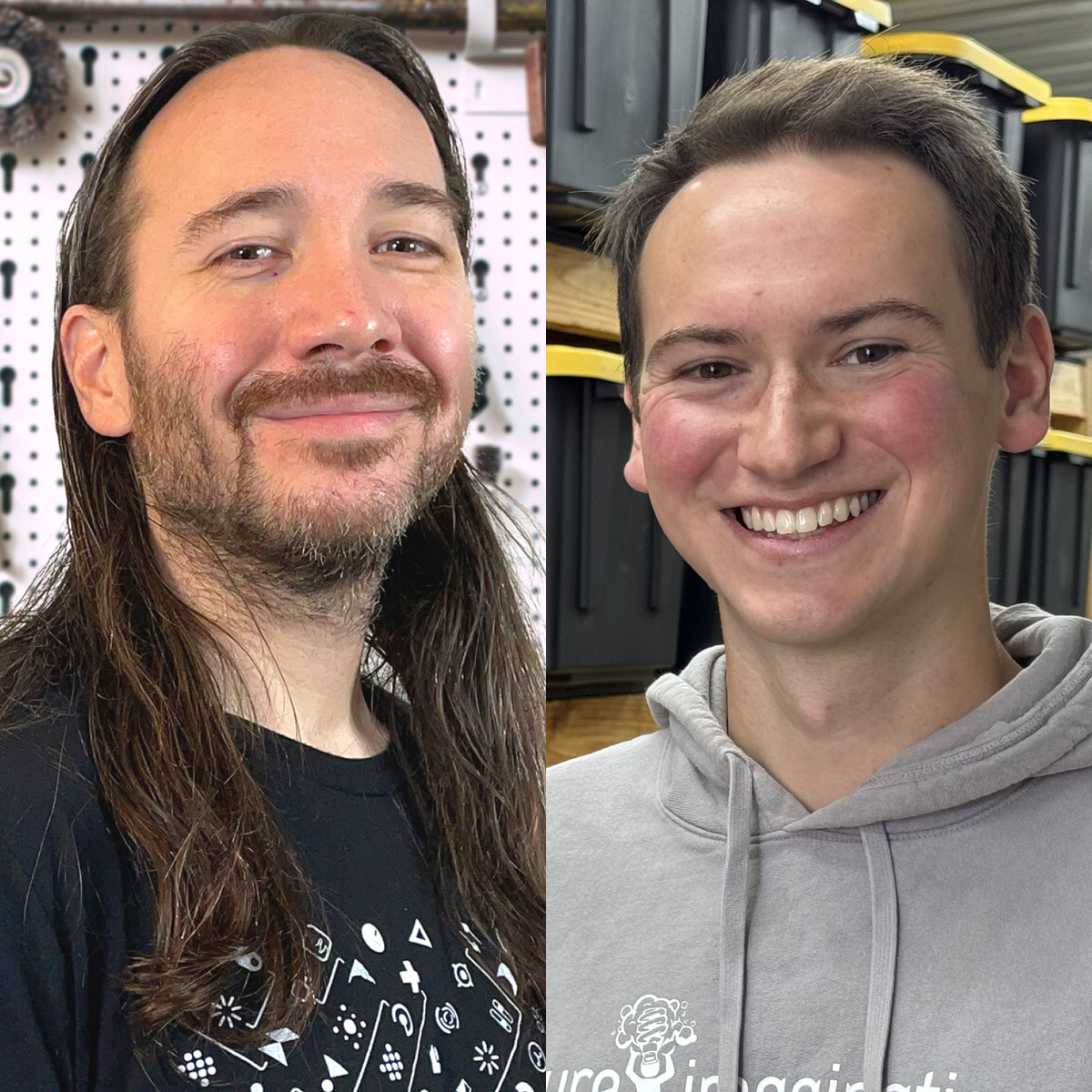
Denio and Cronise will examine the embedded electronics used in cash dye packs and tracking devices. Drawing on equipment bought at auctions, they’ll explain what sits inside stacks of cash, how remote triggers work and how these systems changed over time. The subject offers a close look at the intersection of electronics, radio control and physical mechanisms, with the speakers also considering whether such safeguards can be defeated.
Building systems people can use and repair

Ashleigh Pomerant — “No Refresh Button: The Case For (and Against) Putting a Browser on Your Device”
A web interface running on a Raspberry Pi may look like a standard browser app, but a device changes the assumptions underneath it. Hardware owns the state, sensor readings can drive screen updates, and memory and processor limits matter. Pomerant will explain why WebSockets can suit this pattern better than REST, then weigh those constraints against the advantages of browser rendering, existing libraries and a large developer community. An RFID-input device will show how the pieces fit together.

GC — “EDA for Everyone: PCB Design in the Agentic Era”
GC’s talk takes up the possibility that open-source design software could make it easier for more people to create and ship hardware. The description promises parody alongside discussion of the next wave of electronic design automation tools. That framing leaves room for both a critique of inflated expectations and a look at what new software may change in the path from idea to circuit board.
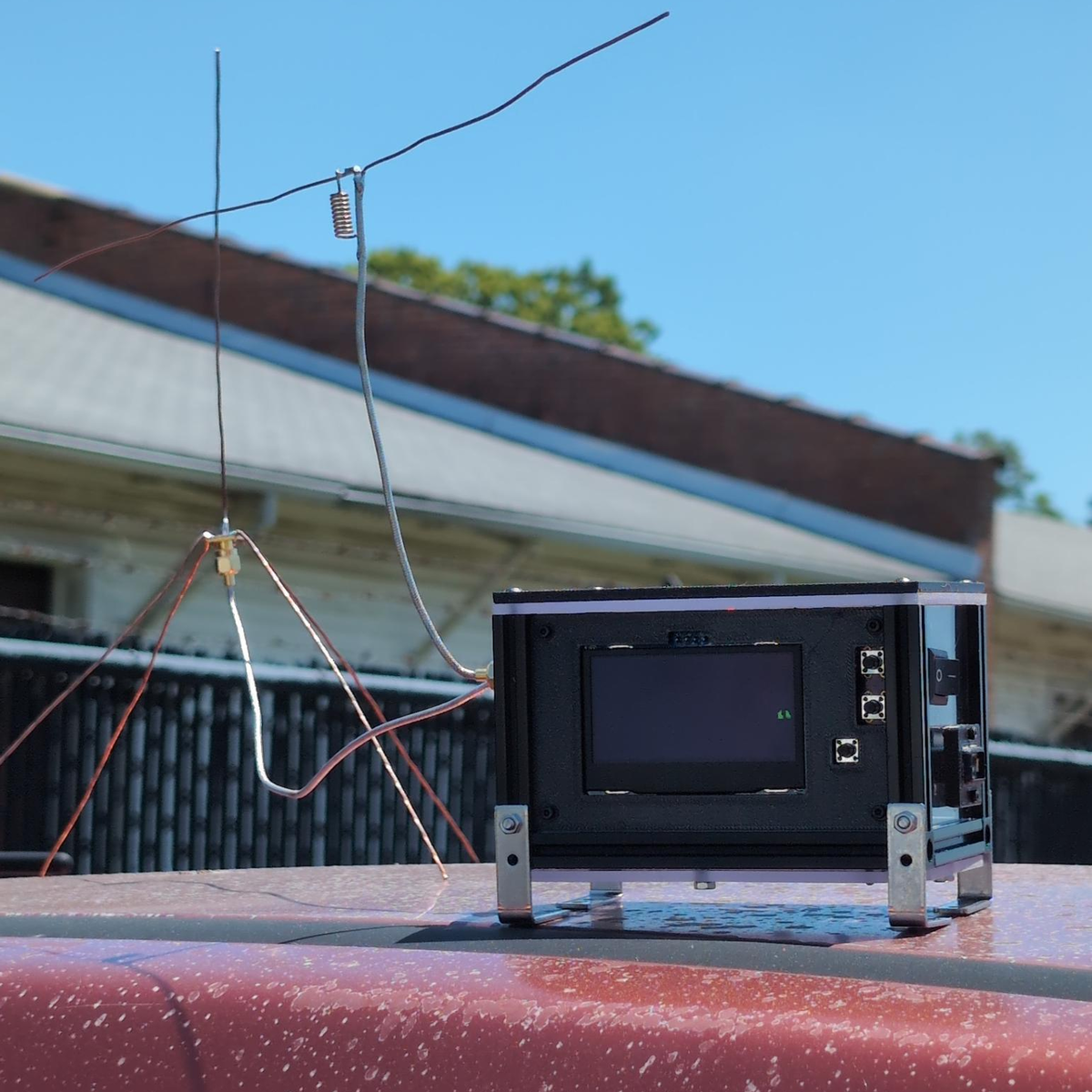
Eric Hall — “LoRa and Beyond”
Hall built a small ground station to receive LoRa satellite communications using affordable parts and custom antennas. The project was developed from the ground up rather than assembled around an existing framework such as tinyGS. The talk should interest anyone weighing the convenience of established software against the insight and control that come from building a receiving system themselves.
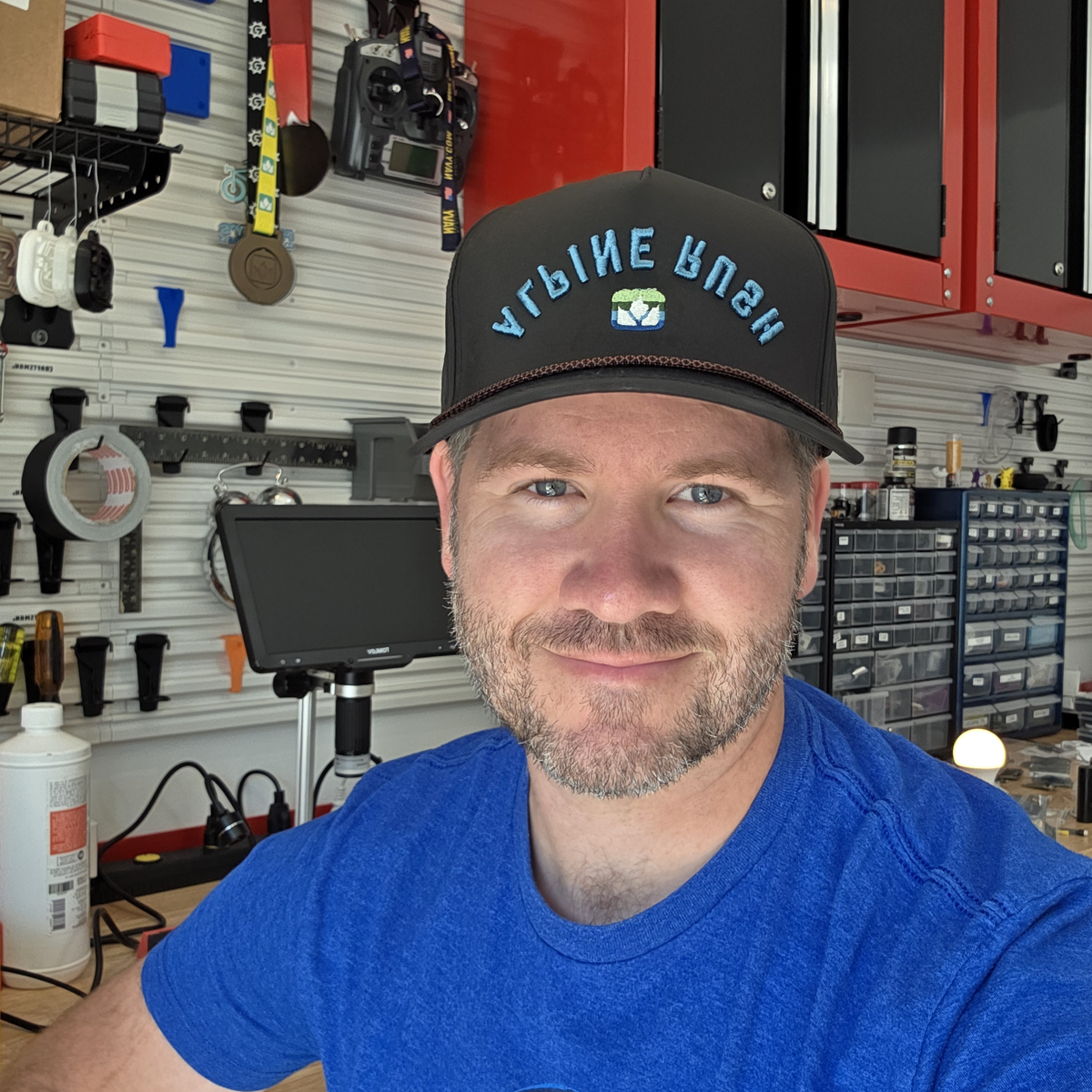
Stephen Farnsworth — “Secrets of Ghidra: Reverse Engineering Proprietary Smart Home Sensors”
Old sensors can still be useful even when their original system is gone. Farnsworth started with devices built around TI MSP430 microcontrollers and a firmware dump discovered by another tinkerer. Using Ghidra to examine the firmware, he worked out the sensors’ proprietary protocol and found a way to connect them to Home Assistant. His talk will cover practical lessons for analyzing large, monolithic firmware images, including why firmware alone may not explain a device: its hardware and behavior provide necessary clues. The result brought hundreds of dollars’ worth of sensors back into use.

Ryan Mast — “The Perfect BLEnd: Reverse Engineering a Bluetooth-Controlled Smart Blender for Better Smoothies”
Mast’s smart blender had a practical flaw: ingredients could stick beyond the blades’ reach, while control depended on an app that stopped working after an iOS update. By reverse-engineering the Bluetooth Low Energy connection, Mast found how to set the blender’s controls directly and built an alternative way to operate it. The talk follows the failed attempts as well as the eventual solution, ending with a custom blending profile. It’s a compact example of how understanding a device’s wireless interface can restore control when its software support falters.
Fabrication, materials and physical experience

Baird Bankovic — “Achieving Quality Photoresist Uniformity on Asymmetric Substrates”
Photolithography depends on applying an even layer of photoresist, but spinning a substrate works poorly when its shape isn’t rotationally symmetric. Bankovic will discuss several coating methods for oblong surfaces and describe a process that improved uniformity on silicon substrates measuring 50 by 100 by 30 millimeters. In that case, the reported variation fell from 12% to 1%, approaching the uniformity associated with wafers. The focus is on adapting a familiar fabrication step to substrates that don’t fit its usual geometry.

Henry Amador — “Beyond the Breadboard: Bringing PCB Fabrication into the Makerspace”
Amador will describe an in-house PCB workflow developed at a university makerspace. A fiber laser selectively removes copper from blank circuit boards, giving students a way to produce and revise designs locally. The talk covers how the process took shape and what the team learned. Its practical value is shorter iteration: students can try more ideas during engineering courses without relying on an external fabrication cycle for every revision.
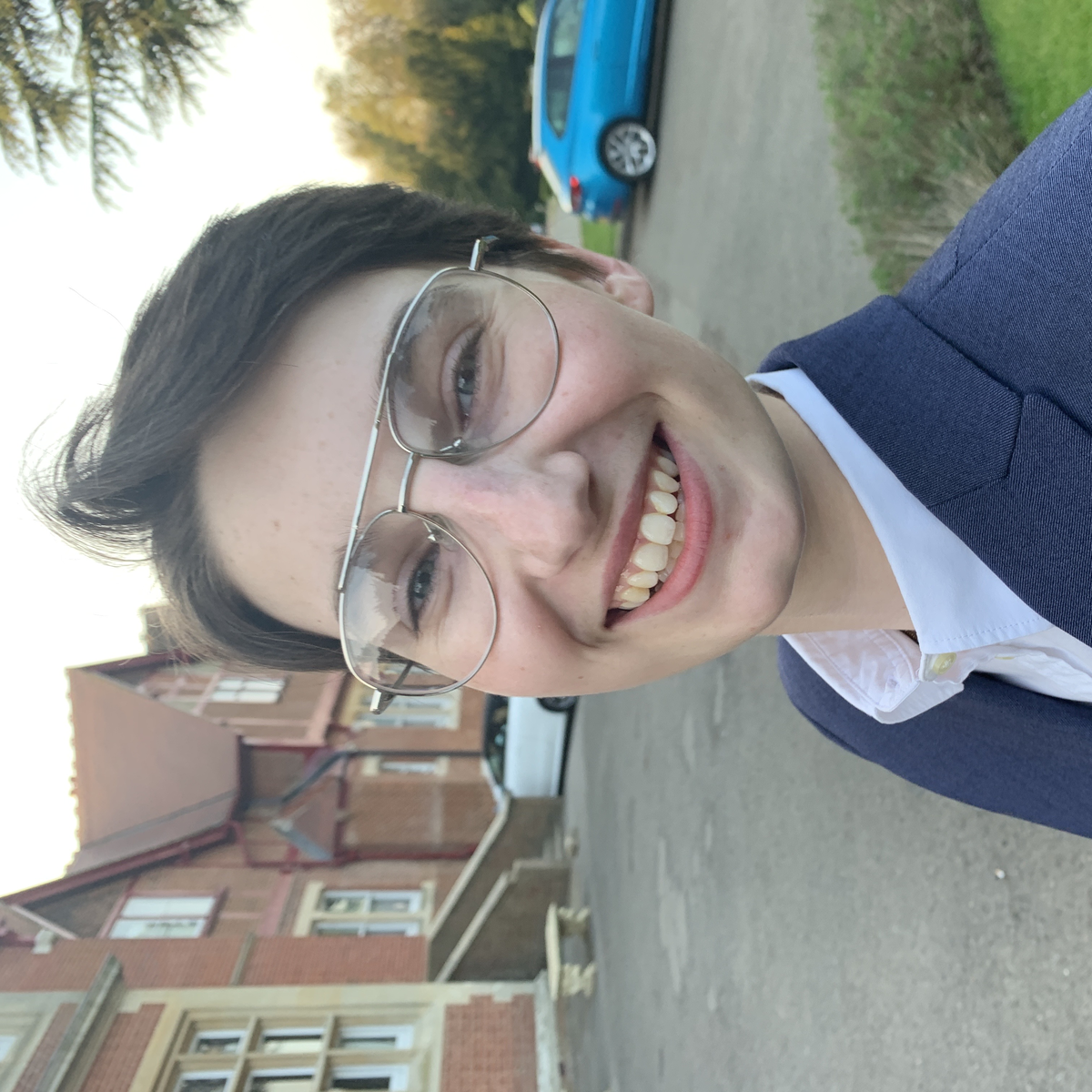
Lily Gabriel — “Spinning E-textile Yarns”
Conductive thread, yarn, fabric and wool roving can be difficult for hobbyists to source reliably, especially in small quantities. Gabriel will demonstrate ways to make e-textile materials, including hand plying, drop-spindle plying, core spinning and supercoil. The methods use added twist and combinations of conductive strands, cores and roving to produce different yarn structures. For makers developing wearable or fabric-based electronics, making material in-house can open up options that store-bought supplies don’t offer.

Sarah(í) Alvarez — “Finding a Loop: Creative Uses for e-Waste”
Alvarez looks at reuse through a particular source: a record label’s backlog of compact discs it couldn’t sell. The talk traces experiments with recycled CD filament, salvaged metal foil and less industrial approaches to discarded materials. Rather than promising a universal recycling method, it explores what can emerge when makers treat a surplus material as a creative constraint—and accept that reuse can be messy.

Kerry Scharfglass — “How to Make and Have Feelings”
Touch conveys far more than pressure. People can use it to recognize a surface’s texture or tell that fur feels soft, drawing on biological systems whose signals are more complex than a simple contact sensor. Scharfglass will explain how the body turns those signals into a sense of texture and discuss ways designers can use that knowledge to create different haptic experiences. The talk connects the science of touch to a practical design question: what should a device communicate through its physical feedback?
Robots, interfaces and on-device computation
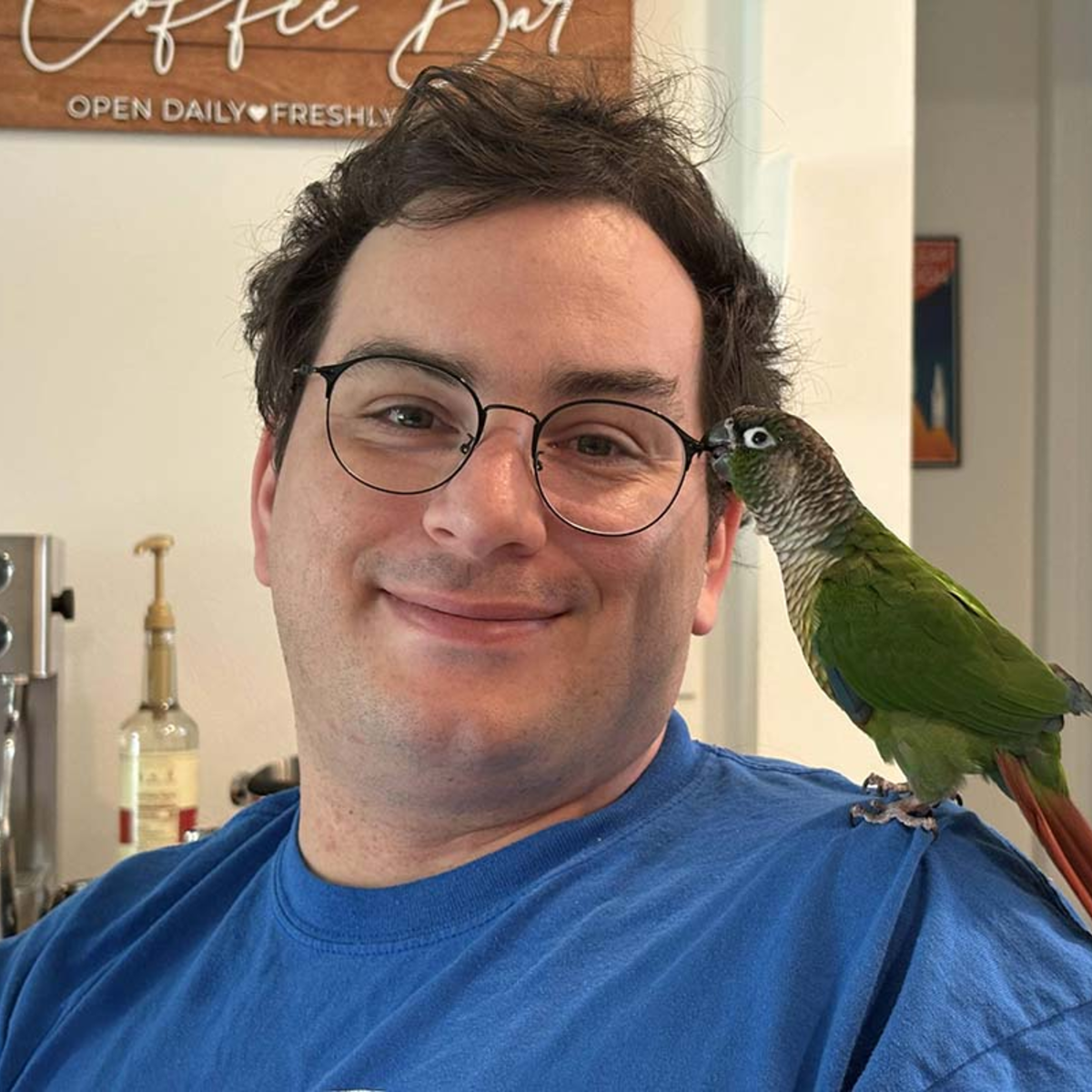
Joe Needleman and Dex — “HM and I (Down the Rabbithole of Human Machine Interfacing)”
Needleman and Dex will look at how physical controls and fictional interfaces have influenced one another. Their examples include three completed builds, each with a different purpose, and cover the work behind each system: hardware planning, firmware and the software connecting a computer to the controls. The talk also considers how agent-to-agent AI may affect control-system design. Its strongest draw is the end-to-end view of interfaces as working machines rather than screen mockups.
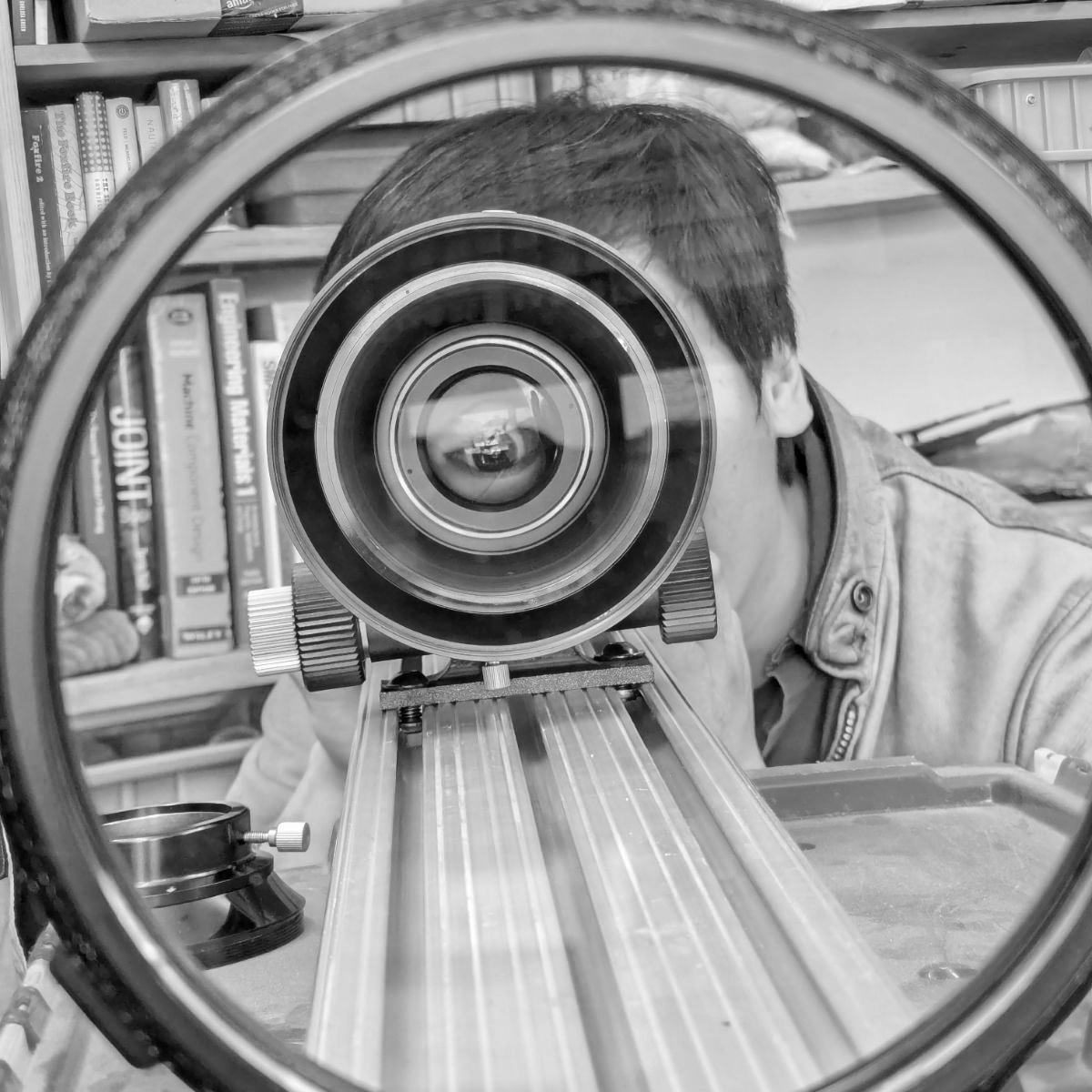
John Zhang — “How many neurons does it take to pump a swing?”
Zhang revisits a robot-learning problem he first explored in 2020: teaching a robot to pump a swing. Inspired by work on a two-neuron bicycle-riding model and videos of gymnastic robots, Zhang found that a Q-learning approach could solve the swing task with just one neuron. The talk uses this small, nonlinear control problem to ask what it can teach us about physical intelligence. That makes the project a useful counterpoint to the assumption that more complex behavior always demands a larger model.

Sher Amir Dullat — “StageReady: a standalone, portable device for natural, studio grade vocal pitch correction in real time”
Dullat’s project aims to bring personalized pitch correction to a portable edge device. The system separates a voice into its resonant character and the underlying vocal source that sets its note. It adjusts the pitch while a neural network running on the chip’s AI accelerator rebuilds the vocal source at the corrected pitch. The engineering challenge is to keep the processing responsive enough for live use while retaining the singer’s recognizable tone and a natural, breathy quality. The talk will explain how the design approaches that balance.
Kaveh Pezeshki — “The Hardware of Superconducting Quantum Computing”
Quantum computing can sound remote from the work of hardware hackers, but its measurement and control systems rely in part on familiar equipment adapted for demanding tasks. Pezeshki will introduce transmon qubits and explain how their states are controlled and measured. The talk’s emphasis is on the hardware and on repurposing common tools, offering a practical route into a field where many of the supporting techniques are still being worked out.
Open projects and creative practice

Adriel Bustamante — “Rover Tracks: A Retrospective on the Open Source Rover and What’s Next”
Three years after the Open Source Rover v2 release, Bustamante will reflect on joining its builder community and becoming a project maintainer. His account covers changes he made to his own rover, improvements the project could use and the experience of representing it at Maker Faire. It also looks ahead to what comes next for both his machine and the wider project. For open hardware teams, the talk promises lessons from the often less visible work of maintaining a design after its initial release.

Sage Cadence — “How to build things that people care about in the age of AI”
With abundant information and easy-to-access building tools, producing another idea is rarely the hard part. Cadence will focus on deciding what deserves to be built and how to make it matter to people. The approach combines an engineer’s way of thinking with a storyteller’s, aiming to help makers filter noise and communicate why a project is worth attention. It’s a question of judgment and intent as much as technical execution.
Together, these talks make Supercon’s program a tour through the choices that shape a working project: how to inspect a chip, adapt a process, handle the limits of a device and keep hardware useful after its first version. The most valuable takeaways may come from the details speakers share about what failed, what they changed and what they’d try next.